> ## Documentation Index
> Fetch the complete documentation index at: https://docs.gr4vy.com/llms.txt
> Use this file to discover all available pages before exploring further.
# Android SDK
> Get set up with the Android SDK for your checkout experience.
**New Kotlin SDK Available**
It is recommended to use the new [Kotlin SDK](/guides/payments/native/overview) for native Android development.
It provides native 3DS support, improved performance, and a modern API. This Android SDK (Embed-based) is still supported and maintained for web view implementations.
With the Kotlin SDK, your app collects the card number in its own fields, which puts your app in scope for the Payment Card Industry Data Security Standard (PCI DSS). See [Self-certification and scope](/guides/payments/native/overview#self-certification-and-scope) before you choose it. To keep card data out of your app, use this Embed-based SDK.
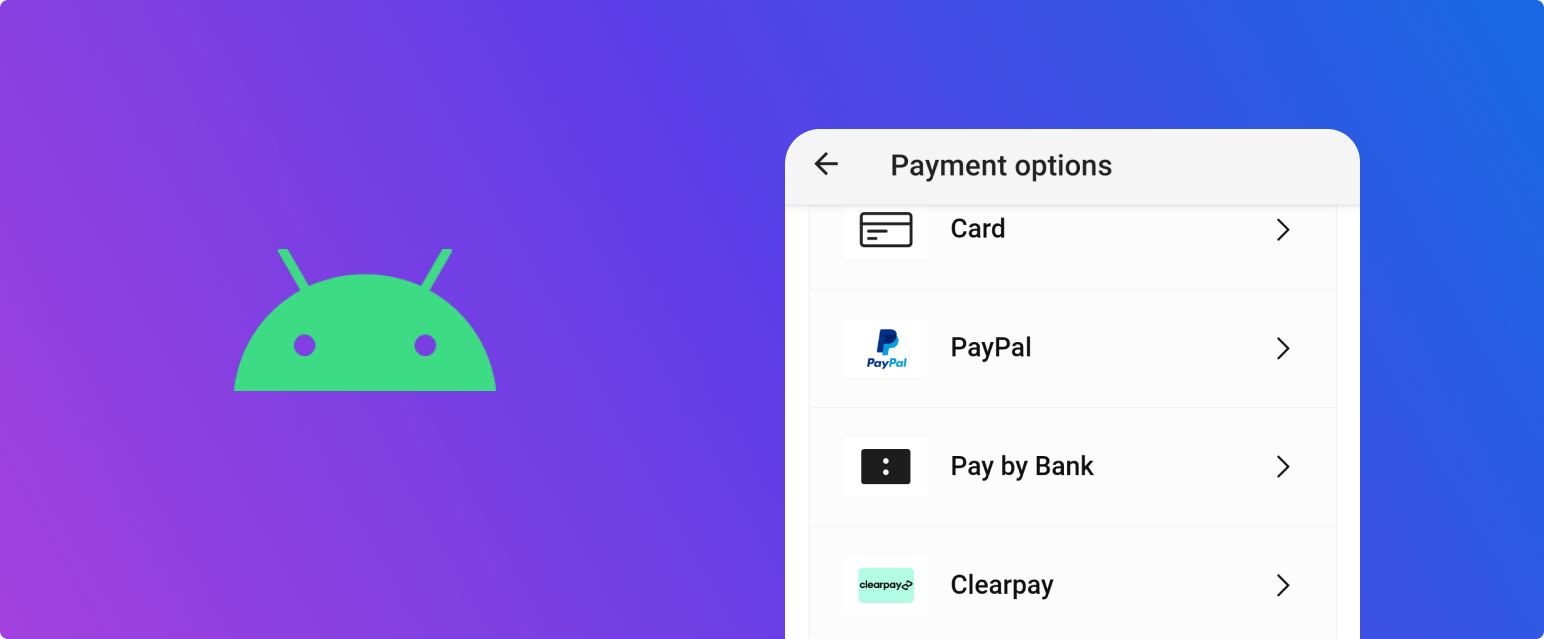 In this quick start guide, the following steps are covered.
1. [Create an API key](/guides/payments/android/quick-start/key) which is needed to generate
the signed JWT token in step 2.
2. [Set up a server-side SDK](/guides/payments/android/quick-start/sdks) to generate a client
token for authenticating to the API.
3. [Install the Android SDK](/guides/payments/android/quick-start/android) which handles the
capture of the payment method details and process the payment.
4. [Process the transaction](/guides/payments/android/quick-start/transact) and inspect the result.
This documentation is built and hosted on [Mintlify](https://mintlify.com), a developer documentation platform.
In this quick start guide, the following steps are covered.
1. [Create an API key](/guides/payments/android/quick-start/key) which is needed to generate
the signed JWT token in step 2.
2. [Set up a server-side SDK](/guides/payments/android/quick-start/sdks) to generate a client
token for authenticating to the API.
3. [Install the Android SDK](/guides/payments/android/quick-start/android) which handles the
capture of the payment method details and process the payment.
4. [Process the transaction](/guides/payments/android/quick-start/transact) and inspect the result.
This documentation is built and hosted on [Mintlify](https://mintlify.com), a developer documentation platform.